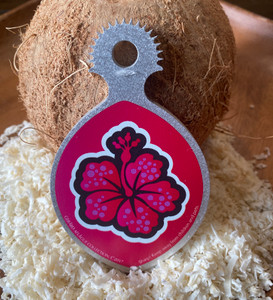
This purchase is for one (1) aluminum non-corrosive coconut grater blade. Screws are not included with this purchase. We recommend that you bring grater blade with you to ensure that screws fit through holes, and that you choose non-corrosive type screws. Last image shows how to install grater blade onto a wooden bench. You may also install this blade on a flat surface rather than how we show it here (where we carved out a channel).
---
Elevate your kitchen experience with this aluminum coconut grater blade — designed for durability and efficiency.
Crafted from non-corrosive, light-weight premium aluminum, this grater is built to last. Its unique 90-degree angled design gives you two sharp grater heads in one, doubling your grating power. When one side eventually dulls, simply flip it over for a fresh, sharp blade—ensuring you always have a tool that performs like new. And when both sides need attention, use a file to easily resharpen the teeth for long-lasting use.
This coconut grater is made to fit seamlessly onto your wooden bench. The screws are not included, but it's easy to install — just match the screw holes with smaller pilot holes on your bench for a secure fit. Designed with precision, the dimensions are approximately 2.5" wide at its widest and 8.54" long at its longest.
Invest in a tool that combines functionality, longevity, and quality—perfect for all your coconut grating needs. Another exclusive product from the Gerard Aflague Collection.
SAFETY WARNING
This product contains a sharp coconut grater blade. Improper, careless, or unsafe handling can result in serious injury. Always handle with caution and keep fingers, hands, and loose clothing away from the blade during use. Do NOT use, store, or leave this product within reach of children or pets. Children and pets must never be left unattended near this blade, whether mounted or unmounted. Use only as intended. Inspect before each use and discontinue use if damaged. Handle, clean, and store responsibly.
How to Properly Grate a Coconut Using a Coconut Grater Blade
1. Prepare the Coconut
-
Choose a mature brown coconut—the flesh will be firm and ideal for grating.
-
Crack the coconut open using a safe method (such as tapping with a mallet along the equator).
-
Drain and collect the coconut water if desired.
-
Separate the two halves and remove any loose shell fragments.
2. Secure the Grater
-
Ensure the coconut grater blade is firmly mounted onto the wooden bench or base, with all screws tight.
-
Place the bench on a stable, non-slip surface.
-
Sit comfortably on the bench if it is designed for seated use; otherwise, position yourself so you can apply steady, controlled pressure.
3. Position Yourself Safely
-
Hold one coconut half with both hands, inner flesh facing the blade.
-
Keep your fingers clear of the blade edges at all times.
-
Rest the coconut edge gently against the teeth of the grater before beginning.
4. Begin the Grating Motion
-
Use slow, controlled, 3-4 rhythmic motions in a forward direction to press the coconut flesh against the blade.
-
Allow the blade to shave off thin layers of coconut as you move the shell steadily.
-
Maintain consistent pressure — do not press too hard, as this can cause slipping or uneven grating.
5. Rotate for Even Grating
-
Slightly rotate the coconut half as you grate to ensure the entire interior is evenly removed.
-
Continue until the desired amount of coconut has been collected.
-
Stop once the coconut shell becomes too thin to safely hold.
6. Collect the Grated Coconut
-
The grated coconut will fall beneath the blade—place a clean bowl or tray underneath to collect it.
-
Shake or tap the bench lightly to clear any coconut pieces stuck between the teeth.
7. Clean and Store the Grater
-
Carefully brush away coconut residue using a small brush or cloth.
-
Wash and dry the blade thoroughly to prevent buildup.
- Store the tool in a safe location—never within reach of children or pets
How to Select Fresh Brown Coconuts at the Grocery Store (Step-by-Step)
1. Choose Mature Brown Coconuts Only
Look for fully brown, hairy, mature coconuts—not green ones. Brown coconuts contain firm white meat ideal for grating.
2. Inspect the Outer Shell for Cracks
Examine the coconut from all angles.
-
Avoid coconuts with visible cracks, soft spots, or mold.
-
Even small cracks can mean the coconut is spoiled or leaking.
3. Check the “Eyes” (the 3 dark circles)
Look closely at the three “eyes” on one end of the coconut:
-
They should be dry, firm, and free of mold.
-
A soft or leaking eye is a strong sign the coconut is bad.
4. Shake the Coconut
Hold it close to your ear and give it a gentle shake.
-
You should hear a clear sloshing sound of coconut water inside.
-
More water inside generally means a fresher coconut.
-
If you hear little to no water, the coconut may be dry or old.
5. Feel the Weight
A good coconut should feel heavy for its size.
-
A heavier coconut typically contains more water and moist, healthy flesh.
-
A light coconut may be dried out inside.
6. Tap the Shell (Optional but Useful)
Gently tap the coconut with your knuckles.
-
A fresh coconut gives a dense, solid sound.
-
A dull or hollow sound can indicate internal spoilage or dryness.
7. Smell the Coconut (If Possible)
Smell near the eyes and shell.
-
A fresh coconut should have no sour or fermented odor.
-
Any sourness indicates spoilage.
8. Avoid Refrigerated Coconuts in Poor Condition
Some grocery stores refrigerate coconuts, which is fine—but refrigeration can hide mold.
-
Always do a close visual inspection when selecting cold coconuts.
9. Choose More Than One if Needed
If the coconut is for grating or cooking, select 2–3 coconuts, as quality can vary, and using fresh ones guarantees the best flavor.
10. Store Properly After Purchase
-
Keep whole coconuts at room temperature for up to several weeks.
-
Refrigerate only after opening.